Travel safety and first aid
On the hiking trail you may encounter difficulties and even dangers. Some of them are associated with real obstacles - passing passes, swamps, rapids rivers, others depend on weather changes and are episodic or seasonal. The third - the most numerous - are caused by the incorrect behavior of the tourists themselves.
For the convenience of presenting the material, possible dangers and accompanying injuries are conventionally divided in this section into four groups. The first is directly caused by the wrong actions of tourists, and the other three, in addition, are also associated with certain conditions of the trip.
DANGERS, INJURIES AND DISEASES CAUSED BY IMPROPER ACTIONS OF TOURISTS
Thermal burns
Careless handling of a fire, a camp stove, a camp gas kitchen, overturning dishes with hot food and scalding with boiling water or steam are very common causes of injuries while traveling.
Prevention of thermal burns. To prevent injuries associated with burns, the following rules must be followed. Those on duty at the fire must wear long trousers, shoes and mittens; fire fliers, a crossbar or a rope for hanging buckets must be absolutely reliable; prepared hot food should be placed only in a place where people cannot step on it; In winter, it is not recommended to place dishes with hot food in the snow, since when it thaws, they easily tip over; near the fire it is necessary to use long ladle; sparkling firewood should be avoided; do not allow games or entertainment with fire.
To prevent dishes with hot food from tipping over when using stoves (especially when cooking in a tent), and also to reduce gasoline consumption, you can make a camp kitchen yourself.
The kitchen consists of a folding frame made of a duralumin corner, to which a metal sheet with holes for pots is attached on top. Primus stoves are placed under them on a duralumin or other stand. The frame is covered on the sides with quartz (thin asbestos) fabric, which is attached along the perimeter of the sheet so as to provide access to primus stoves and pan lids.
First aid for thermal burns. In case of a flame burn, first of all, you need to extinguish the burning clothing of the victim (by wrapping the burning person in thick cloth, dipping him in water, throwing snow on him) and quickly remove them. If you are burned by boiling water or hot food, you also need to quickly get rid of clothes soaked in hot liquid.
For minor burns, it is recommended to wipe the wound with a swab soaked in hydrogen peroxide, then apply a bandage of a sterile bandage soaked in a solution of potassium permanganate or baking soda. Subsequent treatment of local I-II degree burns in field conditions consists of lubricating the burned areas of the skin with streptocidal (syntomycin) emulsion or Vishnevsky ointment. After tourists go out into populated areas, they should consult a doctor.
In case of burns of large surfaces of the body or deep tissue damage (III-IV degrees), the victim must be urgently transported to the nearest medical center. Only sterile dressings are acceptable. If the burn touches areas of the skin near the joints, then before transportation, a splint made from available materials is applied to the limb.
In addition, the victim is recommended to take orally, or even better, inject some painkillers and heart medications - morphine, pantopon, camphor; inject antitetanus serum subcutaneously. The dosage of medications is given in the section “Campaign First Aid Kit”. If there is no medicine, you can give the victim strong, sweet tea before medical intervention.
When providing first aid for burns, you should not do anything that could complicate subsequent treatment. Do not tear off areas of clothing that have stuck to the burnt skin; open blisters on the skin; lubricate the burn surface with fats or oils; use such “folk remedies” as cobwebs or urine. All of these can cause wound contamination or worsen tissue damage.
Injuries from cutting and piercing weapons
In the hands of an inept or undisciplined tourist, any cutting or piercing implements become potentially dangerous and can cause injuries and cuts. This usually happens when preparing firewood, falling while holding a knife or ax, or simply as a result of mischief.
Prevention of injuries from sharp weapons. Tourists should follow the following rules: carry axes, saws, and knives only in sheaths on the route; at rest stops, place sharp tools in one designated place (under no circumstances sticking them into trees, especially at human height); when spending the night, hide sharp weapons under the tent; use gloves with an ax and saw; when cutting branches from a lying tree, be on the other side of its trunk; do not allow all kinds of fun related to throwing knives or axes at trees.
First aid for wounds. In case of a small cut or abrasion, you need to remove dirt from the wound with a swab moistened with hydrogen peroxide, treat the skin around the wound with iodine or a solution of brilliant green, powder the wound with streptocide powder and apply an aseptic bandage. Scratches can simply be sealed with BF glue or covered with a bactericidal plaster. If there is no medication, the skin can be washed with gasoline, water and soap.
In case of venous or capillary bleeding, when blood fills the wound, a pressure bandage is applied to it with help. individual package, and the injured limb should be raised upward.
Arterial (pulsating) bleeding can be stopped by pressing the vessel above the wound site. If the arm is damaged, by pinching the brachial artery, the leg, by pressing the artery against the pubic bone with the large rollers of both hands (Fig. 43).
For persistent bleeding, use a tourniquet. The correct application of the tourniquet is determined by the cessation of bleeding and the disappearance of the pulse (to the periphery). Instead of a tourniquet, you can also use a belt, rope, towel, be sure to place a scarf, gauze, etc. folded several times under them.
The tourniquet can be on the limb for no more than 1-1.5 hours. After this period, it must be loosened, and, if the bleeding from the wound has not stopped, tightened again after a few minutes.
It is recommended that the victim be given an injection of antitetanus serum and, depending on his condition, transported to the nearest medical center.
Treatment of purulent wounds primarily involves cleansing them of pus. This is facilitated by dressings with a strong solution of table salt (1 teaspoon of salt in half a glass of water). The more the wound festers, the more often dressings should be done, but no more than 2-3 times a day. After the wound is cleared of pus and its surface becomes pink, you need to switch to ointment dressings (synthomycin emulsion, tetracycline or streptocidal ointment), changing them no more than once a day.
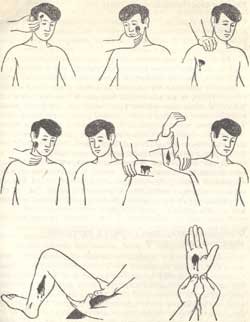 Rice. 49. Places where arteries are pressed to stop bleeding
Firearm injuries
When going to the taiga region, some travelers take hunting rifles with them. Careless handling of them, ignoring safety rules while hunting can result in serious injuries - wounds and burns.
Preventing injuries from firearms. Before going out on the route, you need to make it a rule that only its owner touches the gun; while traveling, playing with weapons or pointing guns at people is unacceptable; It is unacceptable to use the gun for purposes other than its intended purpose, for example as a support or lever; in populated areas, the gun must be kept unloaded and sheathed; cocking (removing the bolt from the safety catch) is possible only before firing; you cannot shoot at noise, in the dark or at an unclear target; The time of hunting and the direction of fire must be chosen in such a way that none of the other members of the group could accidentally end up in the shooting zone.
First aid for a gunshot wound. The victim stops bleeding (see above) and applies a sterile bandage to the wound. If possible, the wounded person is given anti-shock agents available in the first aid kit (see p. 45) and transported to a doctor. You cannot remove crushed stones yourself or “treat” them in other ways.
Food poisoning and gastrointestinal diseases
Eating unhealthy foods can lead to food poisoning or acute indigestion. Symptoms of the disease are cramping abdominal pain, chills, acute diarrhea, painful nausea, decline in cardiac activity, and fever. Since food is prepared for all tourists, poisoning can simultaneously affect most of the group and at the most unexpected moment (it should be borne in mind that the latent period of food poisoning lasts several hours).
Gastric diseases can also be caused by a violation of the diet, including long breaks in meals, eating dry food, very hot or fatty foods, and drinking bad water. Especially often, first-time tourists fall ill because, not knowing how to fight thirst, they quench it with water from polluted streams, swamps or puddles and thereby introduce dangerous microorganisms or chemicals into their bodies.
Prevention of food poisoning. To prevent such poisoning, it is necessary to follow the simplest hygienic rules: when traveling, you should not eat boiled varieties of sausages, untested home-cooked meat and dairy products, canned food in bloated (so-called “bombed”) cans; drinking water should be taken only from clean sources and be boiled; You cannot leave canned food in opened, especially metal, cans for secondary use; You should not eat foods that have a rancid smell or that have lost their normal appearance and color.
First aid for poisoning. First of all, you should rinse your stomach by drinking several glasses of warm water with soda until vomiting occurs. Repeat gastric lavage several times. Then take a saline laxative, half a glass of a pale pink solution of potassium permanganate and tetracycline.
Subsequently, you must follow a strict diet and drink strong, hot, sweet tea. Depending on the patient's condition, he should be transported or accompanied to a doctor. For pain, heart and painkillers are recommended.
First aid for heartburn, stomach pain and stomach upset. Treatment involves following a diet. For heartburn, sour foods, black crackers, jelly, compote, sweets, as well as fried poultry and spices, including salt, are excluded or limited. Milk and porridge (rice, buckwheat, semolina) help. Baking soda or crushed coal (carbolene) will also relieve or reduce heartburn. For abdominal pain, a hot heating pad (heated sand, stone) is useful; medications include besalol 1 tablet 2-3 times a day, vikalin (1-2 tablets per dose), anesthesin (1 tablet).
For stomach upsets, take besalol in the same dosage, chloramphenicol or enteroseptol, 1 tablet (0.5 g) 4-6 times a day.
Suspicion of surgical diseases. Acute surgical diseases of the abdominal organs (appendicitis, obstruction, ulcer, etc.) should not be confused with poisoning or acute gastrointestinal disease.
The most characteristic manifestation of appendicitis is weak willpower in the upper abdomen, nausea, and less often 1-2 times of vomiting. After a few hours (sometimes immediately), the pain moves to the right half of the abdomen, down. Moreover, cramping pain and loose stools are not characteristic of the disease. Before providing medical assistance, cold should be applied to the right half of the abdomen (snow, cold water). Oral medications include chloramphenicol, and subcutaneous painkillers include caffeine. For unbearable pain and long-term transportation, a subcutaneous solution of promedol is recommended (doses on p. 47).
If acute surgical diseases are suspected, absolute hunger is necessary; the patient should not be given laxatives, should not drink, and should be urgently sent to the hospital.
Scuffs, diaper rash, calluses
Failure to comply with sanitary and hygienic requirements for equipment, and especially for clothing and shoes, can easily become the cause of various abrasions, sores and calluses while hiking. More often than not, those tourists who suffer from this suffer for the sake of misunderstood fashion. wear too tight trousers, tight high-heeled shoes or... without a heel and another not suitable for. hiking conditions shoes and clothing. Painful abrasions easily occur in those who do not keep their body clean on the road, do not pack their backpacks well, put on socks carelessly, do not mend them, or wear shoes on bare feet without thick insoles and woolen socks.
Prevention of abrasions, diaper rash, calluses. The most important thing is to choose the right equipment for the travel conditions, fit it and check it before setting out on the route.
During travel, you need to quickly react to changes in weather and other conditions and accordingly change the shape of clothing and the pace of movement, avoiding prolonged local overheating of the body, movement in damp clothes, which are not justified by the situation of “forced marches”, in which beginners, as a rule, lose their legs.
If you discover the slightest inconvenience in shoes or clothing, you must, without waiting for it to develop into abrasion or abrasion, try to eliminate the cause that caused it. To do this, it may be advisable to change clothes, change shoes, and change socks. Sometimes, as a preventative measure, it is necessary to use bandages on the legs with an elastic bandage, wearing gloves (when rowing a boat), placing a soft object between the backpack and the back, etc. Regular hygiene procedures and keeping the body clean are excellent preventive measures.
First aid for abrasions, calluses, heat . If abrasion is noticed in a timely manner, then it is usually enough to eliminate the cause of its occurrence and lubricate the skin with a softening antiseptic cream, for example “Children’s”. In case of obvious redness of the skin, it should be lubricated with iodine tincture, brilliant green solution or alcohol. For further loads, cover with a ring of cotton wool.
If, as a result of detachment of the epidermis and the accumulation of serous fluid underneath, painful blisters and calluses have already formed on the skin, then you can pierce the blisters with a calcined needle and apply a bandage with synthomycin emulsion.
When it gets hot (usually in the groin, under the arms), it is recommended to wash the irritated areas of the skin with water, apply talcum powder, and soften with cream.
Bruises, sprains, dislocations, fractures, concussion
The cause of many injuries is often various falls and breakdowns associated with improper behavior, disorganization and lack of discipline of tourists. Lack of discipline is the most formidable danger of tourist travel. It can manifest itself in disregard for the established rules for conducting hikes and in a reckless attitude towards the route, and in cases of tourists walking alone, and in their ignoring generally accepted norms of behavior and the rules of socialist society. Sometimes this is explained by weak, unauthorized leadership of the group, leading to a split in the team, disobedience of participants to common tasks, and unauthorized changes in the route. Such groups are practically on the verge of an emergency.
Prevention of injuries caused by disorganization and lack of discipline. Covers the entire range of issues related to the preparation and conduct of the trip. This is the unification of the team of the tourist group, the instillation of high responsibility towards comrades, self-demandingness and intolerance to any violation of safety rules. Such tasks should be set before setting out on the route—when assembling a tourist group, distributing responsibilities, and conducting physical and technical training of travel participants.
On the route, preventive measures include: the introduction of group control over an unorganized participant; imposing a public reprimand on an undisciplined group member or punishing him (for example, with extraordinary duty); expelling the offender from the group and removing him from the route. An extreme measure caused by the impossibility of establishing discipline and order in the group is refusal to continue the journey.
First aid for bruises. Bruises are characterized by damage to soft tissues with internal hemorrhage. In case of a bruise, it is recommended to lubricate the skin at the site of injury with tincture of iodine and apply a cold compress for a while, and then apply a bandage. On the second day after injury, heat is applied. In case of blows to the head, chest, or abdomen, the victim must be provided with complete rest, given anti-shock medications and transported to a medical center. If the bruise is in the abdominal area, the victim should not be given food or drink.
First aid for sprains and ligament tears. Signs of injury include sharp pain (at first), swelling, bruising, and painful movements in the joint. Cold is first applied to the area of the damaged ligament, and then a tight fixing bandage is applied, preferably with an elastic bandage. If there is a significant sprain of the ankle or knee joints (most often seen in tourists when they twist their legs), a splint is recommended. Analgin or amidopyrine is given orally.
First aid for sprains. Limited to splinting and painkillers. Self-alignment of joints is not recommended, since dislocations, especially of the ankle, knee, wrist and elbow joints, are often combined with fractures of the bone processes. It is mandatory to transport the victim (or accompany him in case of dislocation of the joints of the upper limb) to a medical center.
First aid for fractures. It consists of applying a splint from available material to fix the fracture site and the areas of the joints located above and below it (Fig. 44). The victim is given amidopyrine or analgin internally and transported to the medical center.
In treeless areas, it can sometimes happen that there is neither a bunch of brushwood nor a stick for a tire. Then it is recommended to bandage the injured arm to the body, and the leg to the healthy leg.
In case of an open fracture, in addition to applying a splint, it is necessary to treat the skin around the wound with tincture of iodine, apply a sterile bandage and, if possible, inject anti-tetanus serum. If the tourist is in serious condition, measures should be taken to prevent shock (see p. 46).
Damage to the spine, skull, and pelvis is especially dangerous. Here, emergency medical intervention is necessary, but the victim can be transported to a medical facility only if he is ensured complete rest (on a special stretcher, wooden board, etc.).
First aid for concussion. Characteristic signs: loss of consciousness (even short-term) and vomiting, then severe headaches. Providing assistance consists of creating absolute rest for the victim, raising the head and applying cold compresses to it; You should limit your intake of liquids, sweet tea is fine. Oral analgin, 1 tablet 2-4 times a day. Transport to hospital.
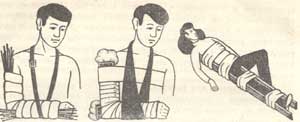 Rice. 44. Applying splints using improvised means for fractures.
Acute vascular insufficiency, fainting
Excessive physical activity in poorly trained tourists - significant excesses in the pace of movement, the weight of the backpack, the climb when moving in the mountains, etc. - can cause acute vascular insufficiency, manifested in severe general weakness, palpitations, pain in the heart area. A person’s lips, nose, and fingertips turn blue, their pulse quickens, and they feel short of breath. Heart failure is predisposed by acute infections, lung diseases, cold exposure, and chronic vascular and heart diseases.
Fainting can be a consequence of overheating of the body, or be caused by a violation of the traveling regime and a long break in eating. Fainting (shock) can also be caused by fear, loss of blood, severe pain from a fracture, dislocation or bruise.
Prevention of acute vascular insufficiency, fainting. To prevent such phenomena, it is necessary to have good physical preparation for the hike, tourists to carefully check their health with specialists and follow their recommendations, gradually and consistently increase the load, good acclimatization, and adherence to the work and rest schedule along the route.
First aid for acute vascular insufficiency. Give the victim a semi-sitting position, ensure complete physical and mental rest, free him from constricting clothing, give caffeine, cardamine, validol (under the tongue) or inject a solution of caffeine or camphor oil subcutaneously. The tourist must be warmed as much as possible and carefully transported to a medical facility in a sitting or lying position with his head elevated.
First aid for fainting. In case of fainting (sharp pallor, cold sweat on the forehead, shallow breathing, darkening in the eyes, tinnitus, loss of consciousness), the victim should be laid down so that his head is lower than his feet, unbutton his clothes, sprinkle his chest and face with cold water, and let him sniff a cotton swab with ammonia. Those who regain consciousness are given strong tea, coffee, and cardiac medications. For prolonged fainting, a solution of caffeine and camphor oil is administered.
HAZARDS, INJURIES AND ILLNESSES ASSOCIATED WITH ADVERSE WEATHER CONDITIONS
Frostbite, freezing, colds
Cold is a fairly common danger when traveling, which for an unprepared tourist can cause chills, colds or frostbite. This applies not only to winter or high mountain routes. In wet, unsuitable clothing for the weather, with inadequate or irregular hot meals, excessive fatigue from overwhelming loads and insufficient sleep, life-threatening hypothermia can occur even at above-zero temperatures. This is also facilitated by wind and high humidity. It is no coincidence that 40-degree Siberian “dry” frosts are often more easily tolerated than temperature drops to -10° in the conditions of Primorye with its humid air.
Prevention of cooling. It consists of preliminary hardening of the body, maintaining personal hygiene and traveling regime, and using appropriate clothing and equipment. When traveling you must: wash your face every day and wash your feet before going to bed; dress according to the weather, having wind and waterproof clothing on hand (and in winter - a mask, spare mittens); do not remain motionless in the wind or rain; when stopping in cold weather, immediately put on warm clothes; whenever possible, thoroughly dry clothes, socks, insoles, and sleeping bag at rest; do not quench your thirst with cold water, snow, ice; pay special attention to your feet and remember that tight shoes, lack of insoles, and damp, dirty socks often serve as the main prerequisite for the appearance of abrasions and frostbite; Do not smear your limbs with any fat (including goose fat) for fear of frostbite; Constantly monitor your well-being and the well-being of your groupmates.
First aid for chills and frostbite. At the first signs of chills or frostbite, you should try to increase blood circulation in the affected area of the body: if your feet are cold, it is useful to make wide swings forward and backward (30-50 times), if your arms, vigorous swings from the shoulder, quickly clenching your fingers into fists and unclenching. If your nose, cheeks, or ears are frozen, you can, in order to cause a rush of blood to the face, walk some distance, bending forward strongly (without removing the backpack from your back), or do 10-15 deep bends forward. If this does not help, it is recommended to rub the affected area with dry, clean wool (not snow!) or just the palm of your hand until the sensitivity of the skin is restored. It is very useful to drink sweet hot tea or coffee from a thermos, eat a few glucose tablets with vitamin C or lumps of sugar.
If the swelling of the skin does not go away, you need to apply an aseptic bandage and wrap the frostbitten area with cotton wool or warm soft linen. When blisters appear, apply a bandage with penicillin ointment or synthomycin emulsion to the affected surface. If health worsens, analgin, amidopyrine, and caffeine should be given orally and the tourist should be taken to a first-aid post.
First aid for freezing. In case of general freezing, the victim is immediately taken to a warm room or a large fire is lit nearby. They take vigorous measures to warm up by rubbing the body. They give cardiac medications and, if necessary, perform artificial respiration. Then the victim is dressed warmly, given hot, sweet, strong tea, fed and transported to the first aid station. If possible, caffeine and camphor oil are administered subcutaneously.
First aid for colds. The result of hypothermia can be tracheitis, bronchitis, and tonsillitis. With these diseases, body temperature rises by 1-3 degrees, headache, general weakness, and sore throat are felt. Treatment involves providing rest (days off) or reducing physical activity. General warming of the body, hot drinks, gargling with soda, a pale pink solution of potassium permanganate, a solution of table salt with a few drops of iodine are necessary; Milk with tea or soda (half a teaspoon per glass) is useful.
Among the drugs, sulfadimethoxine and white streptocide are effective.
Tourists with chronic inflammation of the upper respiratory tract are advised to rinse their throats when cooling down and then drink half a teaspoon of calendula or eucalyptus tincture diluted in a quarter glass of water.
Heatstroke
No less troublesome than cooling can be caused by excessively high air temperatures, which sometimes lead to overheating of the body and heat stroke. Overheating is not necessarily associated with hot sunny weather. Sometimes high pressure (before a thunderstorm) or stagnation of air (for example, when moving in the humid atmosphere of a shady forest thicket) already causes symptoms of overheating in some tourists - increased sweating, weakness, headache, nosebleeds, rapid breathing, nausea. Then, if you do not stop, heatstroke may occur with loss of consciousness.
Prevention of heatstroke. To prevent overheating and heat stroke, you should follow some simple rules.
Do not wear unreasonably warm and “stuffy” (not providing ventilation and not absorbing sweat) clothing; in summer, transitions along the route should be made in the early, cool time of the day, and rest in hot weather; When moving, use shade or wind-blown places whenever possible; do not go out on the route immediately after eating a large meal; slow down in extreme heat.
First aid for heatstroke. The victim is transferred to the shade, freed from constricting clothing, given plenty of fluids, and his head and chest are moistened with cold water (the head should be elevated). If necessary, perform artificial respiration. Caffeine is given internally, and for headaches, amidopyrine and analgin.
First aid for nosebleeds. The victim is seated and provided with rest. A cold compress is placed on the bridge of the nose and the back of the head. If the bleeding does not stop, squeeze the nostrils for 3-5 minutes with your fingers or pack the bleeding nostril with cotton wool, gauze moistened with hydrogen peroxide.
Sunstroke, burn, snow blindness
Solar radiation in the form of strong or prolonged exposure to ultraviolet rays can cause sunstroke in humans, a phenomenon similar to heat stroke, and burns on unprotected skin or mucous membranes. Even such a harmless form of burn as “overtanning” spoils the impression of the entire route and causes painful sensations from the backpack straps on the tourist’s shoulders. You should be especially careful in snow and water. Light reflected from a snow or water surface easily causes burns on the lips, ears, nasal mucosa, and chin. A special type of burn is a burn of the mucous membrane of the eyes - the so-called snow blindness, accompanied by pain in the eyes, nausea, lacrimation, and temporary loss of vision.
Prevention of sunstroke, burns, snow blindness. In many ways similar to the above prevention of heatstroke. It is also necessary to comply with additional requirements: in summer, wear a light-colored hat with a visor and sunglasses; apply protective sunscreen creams (such as “Shield”, “Beam”, “Nivea”); tourists who are not accustomed to intense solar radiation should wear shirts with long sleeves and a closed neck; It is prohibited to sunbathe on a full or empty stomach, or to sleep in the sun; Sun hardening while traveling should be done gradually and carefully.
First aid for sunstroke and burns. See Thermal Burns and Heat Stroke sections.
First aid for snow blindness. The eyes are washed with a weak solution of boric acid, soda, a pale pink solution of potassium permanganate or strong cold tea. The victim is prescribed temporary rest and wearing dark glasses.
Wind chill, clogged eyes
Strong winds lead to hypothermia and frostbite even at moderately low temperatures. Below is a table showing the relationship between air temperature and wind speed at which frostbite can easily occur on exposed parts of the face.
| Wind speed, m/sec | 2 | 4 | 6 | 8 | 13 |
| Air temperature | -41 | -25 | -15 | -11 | -7 |
The wind, which causes drifting snow, blizzards, and dust storms, significantly impairs visibility and distorts the idea of distances. Strong wind not only makes movement difficult and leads to loss of orientation, but also causes nervous fatigue, depression, and a kind of demoralization, especially among inexperienced tourists.
Prevention of wind chill. Similar to the one above when describing the dangers of cold. In case of very strong wind, blizzard, blizzard, dust storm, it is necessary to stop moving along the route and settle down in a forced bivouac under the protection of a dense forest, steep river bank, etc. In windy and dusty weather, you must wear safety glasses to prevent eye contamination.
First aid for clogged eyes. Removal of a foreign body (speck) that has entered the mucous membrane of the eyelid or eyelid; apple, begin with examination of the mucous membrane of the lower eyelid. To do this, the victim is forced to look straight up and pull the edge of the eyelid down with the thumb. To examine the mucous membrane of the upper eyelid, the patient is asked to look straight down, while the skin of the eyelid is pulled down and then everted. Having discovered a speck, it is carefully removed with a damp cotton swab, preferably soaked in a solution of boric acid. If the speck is why-. or is not removed or is on the cornea, the victim should be sent to a medical center. Do not rub your eyes or lick the speck. After removing the speck, drip 1-2 drops of albucid solution 3-4 times.
Electrocution
The danger of a person being struck by lightning is well known, although it is quite rare. When struck by a discharge of atmospheric electricity, the victim experiences convulsive contractions of the muscles of the torso and limbs, breathing becomes difficult, and burns appear on the skin. Such injury can occur even when the person was only near the site of the direct lightning strike.
Prevention of injury from atmospheric electricity. If a thunderstorm catches travelers in the forest, they should not hide under tall trees. Free-standing oak, poplar, spruce, and pine are especially dangerous. Lightning rarely strikes birch and maple trees.
If you are in an open place during a thunderstorm, it is better to lie down or sit down in a dry hole or ditch. It is also necessary to take into account the nature of the soil: on clay soil and near aquifers it is more dangerous to be in a thunderstorm than on rocky or sandy areas. When traveling in the mountains, if there is a danger of electrical discharges, tourists should avoid ridges, rocky ledges and other elevated points of the terrain.
A wet body and damp clothing can contribute to the lesion. Therefore, during a thunderstorm, you should quickly set up tents, lie down in them, change into dry clothes, and not get up unless absolutely necessary. It is recommended to move metal objects (dishes, axes, etc.) several meters away from the camp.
First aid for damage by atmospheric electricity. The person struck by lightning is immediately given artificial respiration; in case of cardiac arrest, the patient is given a closed massage and the body is warmed up. Caffeine, analgin, amidopyrine are given internally. If possible, antishock agents are administered subcutaneously: promedol, caffeine, ephedrine. After breathing and consciousness are restored, the victim should be given hot tea, the burns treated and transported to the hospital. Such a means of “treatment” as burying the victim in the ground is not only useless, but clearly harmful.
HAZARDS, INJURIES AND ILLNESSES ASSOCIATED WITH WILD ANIMALS AND POISONOUS PLANTS
Injuries by wild animals
Large predators are quite rare for tourists: animals, as a rule, smell a person long before he can see them, and, with rare exceptions, they always try to get out of his way. However, if the animal is disturbed, chased or injured, it can become dangerous. Wild animals are also dangerous because they sometimes carry various diseases. Thus, in some areas, tourists should not eat accidentally shot gophers, because they can be plague-bearing; wolves, foxes, stray dogs and cats may suffer from rabies and hydrophobia; They are also carriers of helminthic, fungal and other diseases.
Prevention of animal attacks. If you accidentally encounter a large animal, you need to give it the opportunity to hide, and not use weapons. You should shoot at an animal only when it is clearly attacking, when screaming, whistling, or fire does not help, and when you are guaranteed that the shot will be lethal. The gun must be reloaded immediately after firing. You should approach a fallen animal with caution, especially if its ears are flattened: the animal is still alive and can cause serious injury with its claws, teeth or horns.
First aid for animal injuries. First of all, you should stop the bleeding, then disinfect the skin around the wound, apply a bandage and administer anti-shock agents. A wound inflicted by an animal is always dirty and infected. Therefore, if possible, the victim is injected with anti-tetanus serum and taken to the hospital for treatment.
Bite from poisonous snakes and insects
While traveling, the possibility of meeting a poisonous snake cannot be ruled out. Usually this is a viper, and in the southern republics there are also cobra, viper, copperhead, efa (in total there are 14 species of poisonous reptiles on the territory of the USSR).
A snake bite can have very serious consequences, since the poison quickly affects the vital systems of the human body - cardiovascular, hematopoietic, and nervous. Within half an hour, the person bitten begins to experience general signs of poisoning: weakness, headache, vomiting, shortness of breath, dizziness, tissue swelling appears, and the lymph glands become inflamed.
Prevention of poisonous snake bite. To prevent a snake bite, tourists should know the conditions of their habitat and lifestyle. Snakes are common in wetlands, swamps, near overgrown lakes and ponds, in mountains and deserts. Being nocturnal animals, during the day they hide in old stumps, in haystacks, under stones or tree trunks. Therefore, it is better not to touch these objects with your bare hand, but to use a stick.
You need to be especially careful in abandoned quarries, among stone ruins, in a collapsed taiga hut - snakes sometimes settle in places left by humans. The same caution and a stick pointed forward (alpenstock, ice ax) are useful when moving quickly along the path: on the path, as on stone slabs or stumps, snakes like to bask on a sunny day. For a dormant reptile with a very weak sense of smell and hearing, the sudden appearance of a person may prevent it from hiding in the grass in a timely manner, and the pain from a crushing shoe will force it to defend itself with a bite.
Anyone traveling to areas where there are many venomous snakes should wear thick trousers and high shoes. For the Far East, rubber boots are good in this regard, for some places in Siberia and Central Asia - cow boots, on mountain routes - boots with high welts and cuffs. A thick woolen sock significantly protects against bites.
Before traveling, you need to study the colors of snakes, their distinctive features and be able to recognize poisonous and harmless ones. For example, it is distinguished by two bright yellow heels in the temporal region of the head and round pupils.
A basic acquaintance with the appearance of snakes will allow you not to be afraid of encounters with a godwit and a copperhead. The first is not a snake, but a large legless lizard, the second, although a snake, is from the snake family. Both are not poisonous.
First aid for snake bites. In the first minutes after the bite, you should try to suck out some of the venom from the wound. The bloody fluid that is sucked out should be spat out immediately. Suctioning cannot be performed by people who have sores or abrasions in their mouth. Then, using available materials, a splint is applied to the affected limb and measures are taken to urgently transport the victim to a medical facility. During transportation, it is recommended to put cold on the site of the bite and give as much liquid as possible in order to reduce the concentration of poison in the body and promote its excretion in the urine.
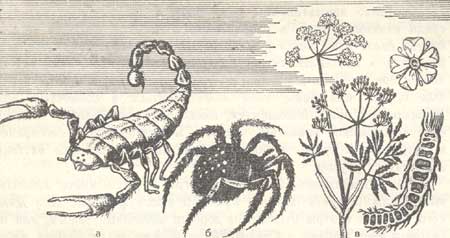 Rice. 45. Dangerous insects and plants: a - scorpion; b - karakurt: c - poisonous plant - milestone
The previously held opinion about the need for cauterization, incisions, and application of a tourniquet is now recognized as incorrect. Cauterization only enlarges the wound, promoting its suppuration, but does not destroy the poison; incisions do not always succeed in causing heavy bleeding, since the poison contains substances that cause rapid blood clotting, and the bite site itself is severely injured. Tightening a limb with a tourniquet also cannot stop the penetration of poison into the body, since it spreads not through the blood vessels, but through the lymphatic vessels.
If a syringe and injection medications are available, then the most radical method of treatment will be the immediate administration of antivenom serum, as well as cardiovascular drugs.
First aid for a poisonous insect bite. The bite of a poisonous insect is in many ways similar to that of a snake. The bites of the karakurt and scorpion are especially dangerous (Fig. 45, a, b); the bites of the tarantula, phalanx (solpug) and centipede scolopendra are also very painful. Prevention of bites in the southern regions where these animals are found includes a thorough inspection of sleeping bags and tents before going to bed, sealing all holes in the tent (canopy), inspecting and shaking clothes and shoes before putting them on, and using repellents. If a tourist is bitten by a karakurt or a scorpion, then urgent administration of an antidote serum is necessary. If it is absent, before the doctor intervenes, you should put a bandage soaked in a strong solution of potassium permanganate on the wound, give half a glass of this weak solution inside, provide rest, warmth, and plenty of fluids.
The bite of a dozen bees or wasps also sometimes leads to a very painful condition for the victim. First aid consists of removing the bee sting (the wasp does not leave a sting), disinfecting the wound and applying an alcohol compress to it. Oral ephedrine helps eliminate toxic effects.
Forest tick bite
The forest tick is a small parasite that carries tick-borne encephalitis viruses - an acute and severe inflammation of the central nervous system, accompanied by high fever, severe headaches, vomiting, convulsions, and paralysis.
The tick's mode of attack is a typical lurking predator. Sitting on the ends of blades of grass and branches, he waits until the “prey” (animal, person) accidentally touches the plant. Then the tick instantly attaches itself to the victim and quickly crawls along it, looking for a place convenient for suction. The tick bite is invisible because it injects an anesthetic into the wound. Therefore, the attached parasite is often noticed by itching and inflammation of the skin only after 2-3 days. This is also facilitated by the fact that the tick digs into the most secluded places: armpits, neck (especially behind the ears), groin.
Prevention of tick bites. If your travel time falls in May - early July (the time of greatest tick activity), then you should make inquiries in advance about the encephalitis danger of the area. A list of such territories, as well as vaccination, can be obtained at sanitary and epidemiological stations.
Hiking clothing for tourists is important. This is a windbreaker tucked into trousers or a thick (not made of fleecy fabric!) shirt, the cuffs of which are recommended to be made with double elastic bands. It is good to wear a tight-fitting T-shirt or vest under the shirt. Sweatpants are tied with a belt and tucked into socks. The head and neck are protected with a hood.
When walking the route, it should be taken into account that ticks prefer moist, shaded places with dense undergrowth and grass. There are a lot of ticks in young aspen trees, in clearings, and in raspberry fields. There are even more of them along trails, roads and in places where livestock graze.
In light groves without undergrowth, in dry pine forests, where it is windy and sunny, ticks, as a rule, do not occur. For. days in good weather conditions, ticks are most active in the morning and evening. Heavy rain or heat significantly reduces the risk of their attack.
On the route, it is recommended to inspect exposed parts of the body every 2-3 hours, and when stopping for a long rest (day and evening) to conduct a full inspection of clothing and body. In clothing, you need to especially carefully check all the folds, keeping in mind that ticks cannot be removed by shaking them off.
First aid when detecting a tick. If you find a tick embedded in the body, you need to lubricate it with some kind of fat and remove it from the skin after a few minutes. At the same time, it is important not to crush it and not to leave the head in the wound. Hands and the bite site must be disinfected. If after a few days the victim feels unwell, then he should be provided with complete rest and measures should be taken to quickly transport him to the nearest medical center. It is useful to consult a doctor immediately after a tick bite: the victim may be given a special serum or gamma globulin as a preventative measure.
Nuisance insects
Mosquitoes, midges, biting midges, and horseflies, although they are not, strictly speaking, dangerous insects, are often the most annoying and unpleasant travel companions. Their bites, in addition to itching of the skin, can cause increased irritability, loss of appetite, insomnia, and general nervous fatigue.
Prevention of attacks by pests. The best means of personal protection against disturbing insects are repellents - repellent substances such as creams “Taiga”, “Tabu”, liquids “Repudnn”, “At Prival”, “Deta”, etc. In places especially abundant with such insects, gauze capes or special Pavlovsky nets impregnated with repellent drugs are used. The same preparations can be used to impregnate tents and outerwear.
First aid for insects in the ear. To remove an insect or other foreign body from the ear, the victim lies on his side and some warm water is poured into the ear canal. After a minute, he turns over on the other side and lies for several minutes until the foreign body comes out along with the water. If the foreign body does not come out, no further actions should be taken to remove it independently, and the victim is sent to a medical center.
First aid if an insect gets into your eyes, see above.
Poisoning and burns from poisonous wild plants
The cause of poisoning on a tourist route may be poisonous fruits of plants.
| Plant | Fruit type |
| Belladonna (belladonna) | Black shiny juicy berry |
| Wolf berry | Oval bright red (sometimes yellow) drupe berry |
| Raven's eye | Grey-black berry with a waxy coating |
| Bryonia white (step) | Black berry |
| Lily of the valley | Red-orange spherical berry |
| Kupena (Solomon's seal) | Bluish-black berry |
| Crow berries | Oblong black or red berry |
| Snowberry | White berry |
| Common honeysuckle | Dark cherry berry |
| Bittersweet nightshade | Red ovoid berry |
Acute poisoning can be caused not only by fruits, but also by stems, roots, and flowers of plants. Such dangerous plants are hemlock (hemlock), black henbane, datura vulgare, poisonous aconite, Caucasian clump, speckled hemlock, Lobel's hellebore.
Poisonous wild plants also include leafless anabasis (barnyard grass), herbaceous periwinkle, splendid crocus, swamp whitewing, spring adonis (Adonis), gray yellowwort, marsh marigold, hoofed grass, caustic buttercup, common toadflax, red foxglove, leguminum, and comfrey.
Some plants, just touching their leaves, can cause skin burns with the appearance of blisters and even difficult-to-heal ulcers. These are the wolf's bast shrub (forest lilac), blue wrestler (monkshood), tuberous buten, ash and others.
Prevention of poisoning and burns from wild plants. When preparing for a trip, it is necessary to familiarize yourself with the plant identification guides with the most dangerous representatives of the plant world found in the area of the intended route. It is useful to make sketches or descriptions of such plants for yourself.
Every tourist should know the signs of the most insidious plant - the deadly plant (hemlock), which grows in damp places along rivers, streams and swamps. It has trifoliate, strongly cut, bright green leaves similar to chicken feet, a knotty thick stem with a reddish bloom, small white flowers like dill, the smell of parsley, and a fleshy multi-chambered pink root (Fig. 45 c).
During the hike, you must beware of trying unknown berries and collecting obviously poisonous plants in the herbarium.
First aid for plant poisoning and burns. See sections “Thermal burns” and “Poisoning...”. The victim must be urgently taken to the first aid station. It is advisable to take with you a copy of the plant that caused the injury or disease.
Poisoning with poisonous mushrooms
Of the poisonous mushrooms, the most famous are toadstools (whose poison almost immediately causes suffocation, convulsions, and delirium tremens) and fly agarics. In addition, there are many “camouflaged” poisonous mushrooms: false chanterelles, false honey mushrooms, boletus doubles - gall and satanic mushrooms, false valui, etc.
Some mushrooms that are edible in principle - morels, laticifers, some russula - if prepared incorrectly, also cause dangerous poisoning of the body.
Prevention of mushroom poisoning. First of all, you should carefully study the external signs of edible and poisonous mushrooms, exclude unknown mushrooms from the camping diet, as well as old ones or those requiring special processing.
When preparing mushroom dishes, you must remember that undercooked, undercooked, poorly washed, and even reheated mushrooms can also cause poisoning.
First aid for mushroom poisoning. See the section “Poisonings...”.
DANGERS, INJURIES AND DISEASES ASSOCIATED WITH SPECIFIC CONDITIONS OF TRAVEL IN THE MOUNTAINS AND ON THE WATER
Altitude sickness
When traveling in the mountains, tourists may develop altitude sickness due to lack of oxygen and low blood pressure. It is not necessarily associated with high altitudes. Its symptoms - shortness of breath, palpitations, dizziness, headaches, tinnitus, nausea, drowsiness, muscle weakness, nosebleeds, changes in mental reactions - can appear already at an altitude of 2,000-2,500 m.
Prevention of mountain sickness. The best way to prevent altitude sickness is proper active acclimatization, sufficient training of the body in the pre-hiking period, balanced nutrition and a good night's rest while traveling. Mountain sickness usually affects those who are tired or cold, or who have suffered acute infections and illnesses shortly before traveling. Eating acidic foods (for example, citric acid) and vitamin C helps prevent mountain sickness.
First aid for mountain sickness. Give the victim a rest, ensure peace, and drink plenty of sweet, strong tea. A large dose of ascorbic acid (vitamin C), amidopyrine, and caffeine are useful. If the condition worsens, descent to a lower altitude is recommended. With mild signs of mountain sickness, it is usually enough to unload the victim and reduce the pace of movement.
Rockfall injuries
Rockfalls are one of the common dangers in the mountains. A stone falling from above carries with it other pieces and blocks of rock and can cause a whole hail of stones. And the impact of just one small but high-speed stone is enough to cause a life-threatening injury to a person.
Prevention of rockfall injuries. Everyone going to the mountains should remember that strong gusts of wind, thunderstorms, careless movements of animals and people, and mainly sudden daily temperature changes contribute to the fall of stones.
To avoid the danger of rockfall, you must refrain from driving at the foot of steep rocky slopes, and do not move along rock chutes (couloirs) or cross them. They are especially dangerous (in warm, clear weather) around noon and late in the evening. If a tourist accidentally touches a stone, it is his and his friends’ duty to immediately stop the stone or, in any case, to warn everyone below the slope by shouting: “Stone!” Even when a rockfall begins, as a rule, you can dodge the blow by jumping out to a safe place.
First aid for injuries. See “wounds”, “bruises”, “fractures”.
Avalanche danger
Snow avalanches are considered to be the most formidable and insidious danger of the mountains, which, if there is a sufficient amount of snow, can occur at any time of the year and on slopes of varying steepness.
If a person gets caught in a dry avalanche, there is a very real danger of suffocation from the penetration of tiny particles of snow dust into the respiratory tract under the pressure of an air wave. A wet avalanche easily knocks a person off his feet and, when stopped, quickly freezes, threatening to bury the victim. Any avalanche is traumatic and can lead to freezing of a person.
Avalanche danger prevention. It largely comes down to following the previously mentioned recommendations for mountain tourism. If, despite the measures taken, the tourist group finds itself in an emergency situation, the salvation of the travelers will depend on the speed of their reaction and the decisiveness of their actions.
Having noticed an avalanche overtaking them, tourists should throw off their backpacks, unravel the ends of the avalanche cords and try to quickly move away from the avalanche, and if this fails, do everything to stay on its surface. In case of a dry dust avalanche, it is important to cover your mouth and nose tightly with a handkerchief or scarf.
First aid for those buried under an avalanche. The victims are removed from the snow, artificial respiration is given to them, and after anti-shock measures are taken and splints are applied to the damaged areas, they are transported to the hospital. When searching for those caught in an avalanche and digging up snow, they use all available means: ski poles, skis, buckets, bucket lids, pots, etc.
If the victims could not be found, you should immediately report the accident to the control and rescue point, the local population, other tourists and climbers. There are known cases where victims were buried in an avalanche for several days, and then unearthed and brought back to life.
Accidents on the water
The largest number of accidents occur on water. The causes of accidents can be not only an unsuccessful landing or disembarkation from a kayak, being overwhelmed by a wave, an underwater rock, a large hole in the casing or a break in the shell, but also a violation of basic swimming rules or an ineptly organized crossing of a water barrier.
Preventing accidents on the water. When organizing swimming, the group leader must first inspect the place chosen for this and instruct the group to take the necessary precautions. On the shore (preferably in a boat), a person on duty from among the good swimmers is appointed to monitor the swimmers.
It is prohibited to dive in unknown places, swim in cold mountain lakes and rivers, or swim immediately after walking or eating. Swimming while intoxicated (even mildly) is strictly prohibited. It is not recommended, especially on mountain rivers, to wash alone or sunbathe on rocks over rough water.
On water routes, tourists must have individual and group life-saving equipment.
First aid for a drowning person. If possible, you need to quickly throw a lifebuoy, rope, or extend a paddle to the victim. You need to swim up to a drowning person from behind and grab him by the collar of his clothes, hand or under the armpits. If he drowns a rescuer, cover the drowning man’s mouth and nose with your palm, or, in extreme cases, stun him and swim with him on his side or on his back, working with his free hand and legs.
During a boat trip, tourists who find themselves in the water near an overturned boat should hold on to it and swim to the nearest shore or shallow water. If it is far from the shore, then wait for help from other boats, which, as a rule, should not be more than 50-100 m apart from each other along the route. You can only take victims from the water from the stern or bow of the boat.
After removing a drowning person from the water, open his mouth, clear the airways of sand and silt, remove water from the lungs and stomach (for which the victim is placed with his stomach on a bent knee and pressed several times on his back) and free his chest from constricting clothing. Then they begin artificial respiration.
Artificial respiration. Of the many methods, the most effective and universal is the “mouth to mouth” (or “mouth to nose”) method. With this method, the victim is placed on his back with his head thrown back sharply. The lower jaw is pushed forward to prevent the tongue from retracting, and air is blown into the victim’s mouth or nose 15-20 times a minute at equal intervals. To avoid air leakage, the victim’s nose is pinched with a hand as it enters the mouth.
If the victim’s pulse cannot be felt, then, simultaneously with artificial respiration, indirect cardiac massage is recommended, performed with jerky palm strikes on the area of the 4-5th rib to the left of the sternum with a frequency of 60-70 times per minute. This also contributes to general warming of the body.
When spontaneous breathing is completely restored, which sometimes occurs only a few hours after the start of continuous artificial respiration, the victim is given hot tea and cardiac medications. During artificial respiration, it is useful to give an injection of globeline and caffeine.
DISTRESS SIGNALS AND TRANSPORTATION OF VICTIMS
Distress signals
All tourists should know the signals given by those in distress or accident while traveling. Signals are given in any way: shouting, whistling, a flashlight, a mirror, waving a light object against a dark background or, conversely, a dark object against a light background. In clear weather, the white smoke of a fire is clearly visible (produced by adding green branches and moss to the fire); in cloudy weather, black smoke (resinous branches) is visible.
The frequency of the signal should be 6 times per minute, then a minute break and again a distress signal 6 times per minute. The response is the signal “Call accepted, help is on the way.” It is served at intervals of 3 times per minute, and also in any available way. Having received a distress signal, tourists must immediately provide assistance to their comrades, and if necessary, urgently report the emergency to the local tourist or mountaineering control and rescue point, authorities, and local residents.
Transportation of victims
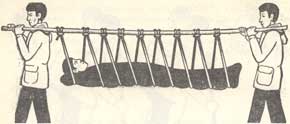
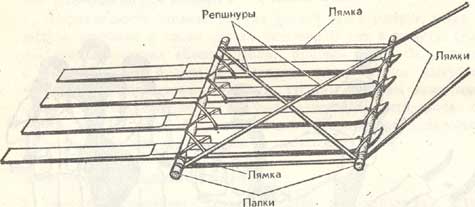
In field conditions, transportation of victims can be done using various available means - a backpack, pole, skis, rope, etc. The main methods of transportation are shown in Fig. 46-49.
When transporting (especially in winter), the victim must be warmly dressed and placed in a sleeping bag. On the way, carefully monitor his health, give him strong sweet tea and, if necessary, heart medications.
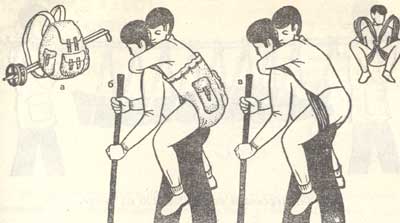 Rice. 46. Transporting the victim: a-on a backpack and sticks; b-in a backpack; in-on a rope | 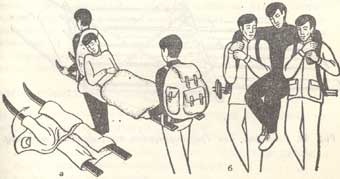 Rice. 47. Transporting the victim together: a - on poles or skis with storm boots: b - on cross poles |
|
|
|